
The sadhu wants pulao. The snob rejects veg biryani. Culinary history disagrees with both
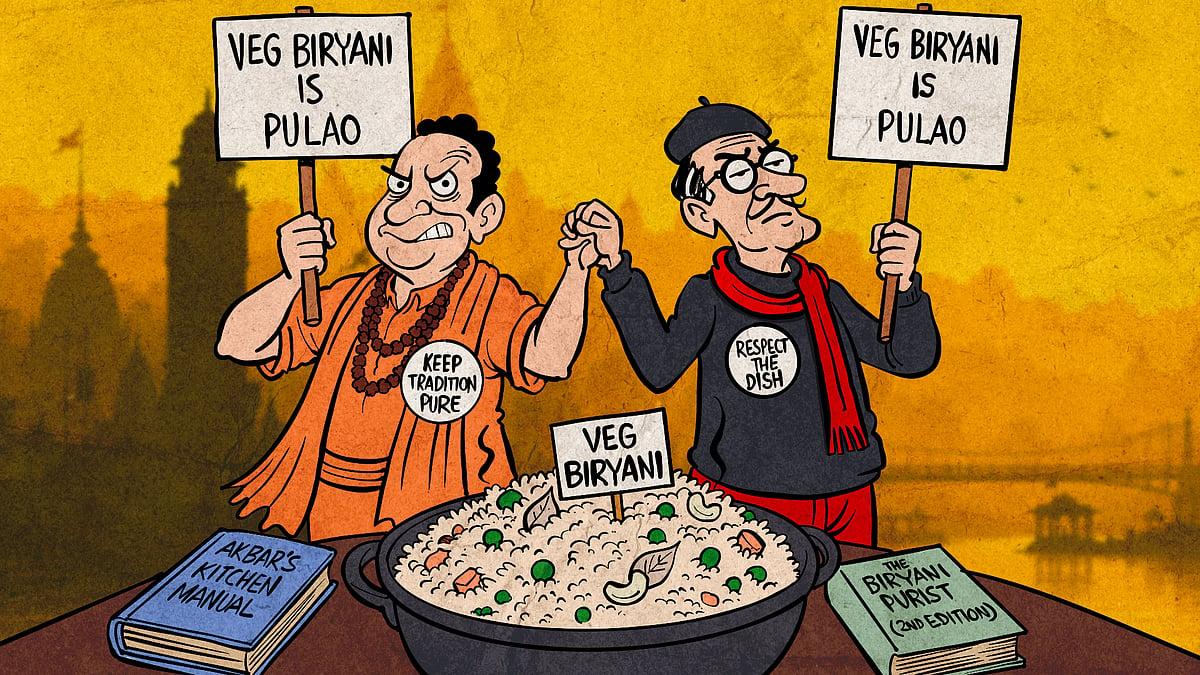
In the ongoing culinary debate surrounding the classification of vegetarian biryani, the seers of the Akhand Parshuram Akhada in Haridwar have found themselves aligned with biryani puritans. Both groups argue against the use of the term "biryani" for vegetarian dishes, with the seers advocating for the term "pulao" to maintain the sanctity of vegetarian cuisine in a traditionally meat-free city. Meanwhile, the puritans believe that labeling a vegetable and rice dish as biryani is a misnomer that undermines the dish's integrity. However, the history of biryani reveals a more complex narrative. The term itself, derived from "biryan," meaning to roast, indicates that biryani has never adhered to a strict definition. Historical records show that layered rice dishes, including those with meat and vegetables, have existed for centuries, often referred to as "biryan pulao." This suggests that the two terms were once interchangeable, reflecting a rich culinary tradition that transcends rigid classifications. Ultimately, the essence of biryani lies in its diversity and adaptability. From the fragrant Kongunadu vellai biryani in Coimbatore to the beloved Zamzam in Bombay, each version tells a unique story. Rather than confining biryani to a singular definition, it is more meaningful to celebrate its variations, embracing the dish's evolving nature and cultural significance.

Comments